How I Went From Hating Men to Creating a Workbook About Healthy Love
If you had told me ten years ago that I would one day create a workbook about healthy love, I probably would've laughed in your face.
At that point in my life, I hated men. At least, that's what I believed. Looking back now, I don't think hatred was the deepest emotion. Hatred was the armor that formed around years of fear, disappointment, betrayal, and experiences that convinced me the world wasn't particularly safe for women.
That perspective didn't come from nowhere.
I grew up with an abusive, narcissistic father who taught me that love was conditional. The moments I felt closest to him were usually the moments when I was making him feel good about himself. If I praised him, agreed with him, or became the daughter he wanted me to be, I might get a glimpse of the love I was craving. Even then, it never felt secure. I spent so much of my childhood trying to earn something that should have been freely given.
Without realizing it, I carried that blueprint into my adult relationships. I became someone who desperately wanted to be chosen. I thought if I could just be enough, loving enough, patient enough, understanding enough- someone would finally love me the way I had always wanted to be loved.
Instead, I found myself in a five-and-a-half-year relationship with someone who was emotionally manipulative and deeply unhealthy for me. Leaving that relationship was one of the hardest things I've ever done, but it also forced me to confront a painful truth. The relationship hadn't created my wounds. It had exposed wounds that were already there.
Ironically, that same relationship led me into the strip club industry. My ex suggested I start dancing, and eventually I did. It's a chapter of my life that people often expect me to speak about in absolutes, but the truth is more complicated than that. Working in the clubs gave me confidence, financial independence, and a sense of freedom I had never experienced before. It taught me how to ask for what I wanted instead of waiting for permission.
It also exposed me to some of the darkest parts of humanity.
Night after night, I met men who felt comfortable saying things they would never admit to the people closest to them. I listened to confessions about cheating, violence, addiction, manipulation, and things that still make my stomach turn years later. I watched entitlement play out in real time. I watched women be objectified so often that it eventually felt normal. Every shift reinforced the same conclusion. Men weren't safe.
Looking back, I don't judge myself for believing that. Given the environments I had lived in and the relationships I had experienced, it would have been strange if I had reached any other conclusion. That belief protected me in many situations. It kept me alert in places where I genuinely needed to be alert. The problem wasn't that I became cautious. The problem was that caution slowly became certainty, and certainty left no room for nuance.
Everything started changing when I began my healing journey. I became fascinated with psychology, spirituality, manifestation, and the way our brains search for evidence that confirms what we already believe. I remember asking myself a question that made me deeply uncomfortable.
What if my experiences were real, but they weren't the whole truth?
That question didn't erase anything I'd been through. It didn't excuse abuse or make the things I had witnessed any less disturbing. It simply challenged me to consider the possibility that my perception had become so shaped by pain that it could no longer recognize anything outside of it.
For the first time, I started noticing men who didn't fit the story I'd been telling myself. Two of those men happened to be my brothers-in-law. They're thoughtful, emotionally mature, devoted husbands who genuinely respect my sisters. They're not perfect because no one is, but they have integrity. They care about the women in their lives. They reject the same patriarchal ideas that I reject. Simply knowing them forced me to admit something I hadn't wanted to consider before. There were good men in the world. I just hadn't believed they existed.
That realization didn't suddenly make me trusting.
I don't believe women should move through the world assuming every man has good intentions. Reality doesn't support that belief, and neither does my own life experience. Women have every reason to be cautious. We navigate the world differently because we often have to. Ignoring that reality isn't healing. It's denial.
What changed wasn't my awareness of what people are capable of. What changed was where I placed my trust.
For years, I believed my safety depended on correctly judging every man who entered my life. Eventually, I realized that was an impossible standard. People can lie. They can manipulate. They can hide parts of themselves for months or even years. Sometimes terrible things happen that have nothing to do with how smart, kind, or aware you are.
What I can trust is myself.
I can trust myself to notice red flags instead of explaining them away. I can trust myself to leave relationships that consistently make me feel small, confused, or unsafe. I can trust myself to enforce my boundaries, even when it's uncomfortable. I can trust myself to make mistakes without abandoning my own growth. Most importantly, I can trust that if someone hurts me, I will find my way back to myself instead of allowing that experience to define the rest of my life.
That shift changed everything.
It also forced me to acknowledge something I hadn't wanted to admit. I wasn't always showing up in healthy ways either. I became defensive. I expected people to disappoint me before they had the chance. I confused hypervigilance with wisdom. I pushed people away to avoid giving them the opportunity to hurt me first. None of those behaviors made me a bad person. They made perfect sense for someone who had spent years trying to survive. They also weren't helping me create the life I wanted.
One of the hardest parts of healing was grieving the certainty I used to have. Believing every man was dangerous made the world feel predictable. It meant I always knew where I stood. Letting go of that certainty meant accepting that life is more complicated than I wanted it to be. Some people are unsafe. Some people are deeply kind. Most people are somewhere in between. Discernment asks far more of us than cynicism ever does because it requires us to pay attention instead of relying on assumptions.
When people ask how I went from hating men to creating a workbook about healthy love, the answer isn't that I suddenly started trusting men. It's that I stopped making every decision through the lens of my past. I learned to respect reality without letting fear become my identity. I learned that caution and openness can exist at the same time. Most importantly, I learned that trusting myself will always take me further than trying to predict the intentions of every person I meet.
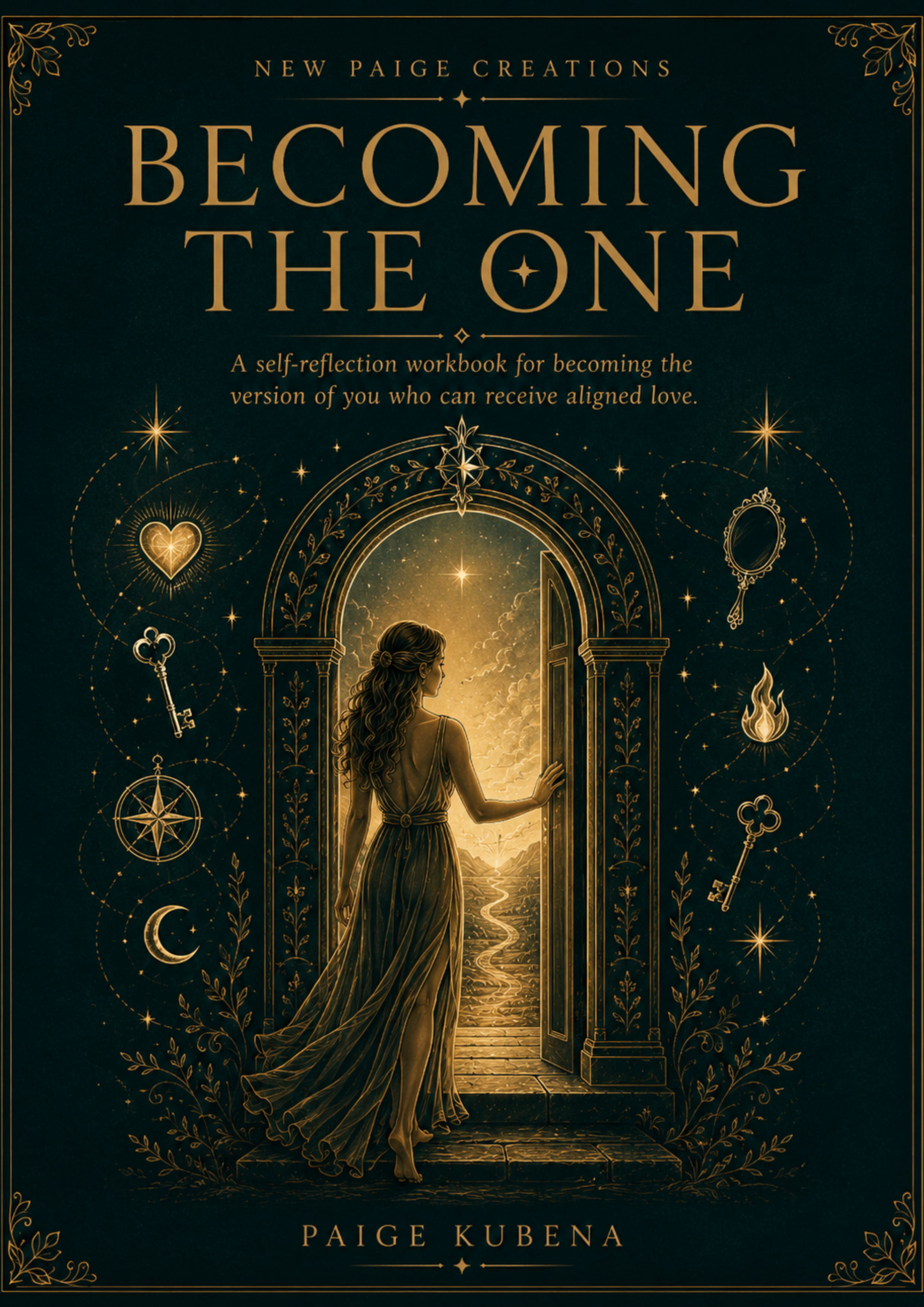
That's why I created Becoming the One. I didn't create it to teach women how to just find a partner. I created it because I know what it's like to feel disconnected from your own judgment, to confuse unhealthy dynamics for chemistry, and to believe that love is something you have to earn. My hope is that this workbook helps women come home to themselves a little sooner than I did. Healthy love doesn't begin when you meet the right person. It begins when you know yourself well enough to recognize the difference between love that asks you to shrink and love that allows you to grow.
Looking back, I don't regret the younger version of myself who hated men. She was doing the best she could with the information and experiences she had. She wasn't broken. She was protecting herself. I'm grateful she got me here. But I'm even more grateful that she wasn't the final version of me.
Healing didn't require me to stop respecting reality or pretending the world is safer than it is. It simply asked me to stop letting my past decide what my future would look like. Today, I still move through the world with caution. I still pay attention. I still trust my intuition. The difference is that my life is no longer built around fear. It's built around trust in myself, and that has changed every relationship I have, including the one I have with me.
Continue Your Journey
I created Becoming the One because I wish someone had handed me these tools years ago. It won't erase your past, but it can help you understand the patterns you've been repeating, strengthen your intuition, raise your standards, and build the kind of self-trust that allows you to recognize emotionally safe love without losing yourself in the process. If this essay resonated with you, I think you'll find the workbook to be a meaningful next step. You can explore it below.
Healthy love starts long before another person enters the picture.
The relationships we create are often influenced by our beliefs, patterns, fears, standards, communication habits, emotional wounds, and the relationship we have with ourselves. If you've ever found yourself repeating the same relationship dynamics, settling for less than you deserve, struggling to trust yourself, or wondering why healthy love feels difficult to find, the answer may not be outside of you.
It may be time to become the one.
Becoming the One is a guided self-development workbook designed to help you strengthen your relationship with yourself so you can create healthier, more aligned relationships in every area of your life.
Through powerful reflection exercises, thought-provoking prompts, and practical tools, you'll explore the patterns, beliefs, habits, and emotional conditioning that shape the way you love, communicate, connect, and show up in relationships.
This workbook isn't about becoming perfect or earning love. It's about becoming more self-aware, emotionally honest, confident, and aligned with the life and relationships you truly want.
Inside You'll Explore:
• Self-worth, self-concept, and personal identity
• Relationship patterns and emotional conditioning
• Attachment styles and relationship dynamics
• Communication, vulnerability, and emotional honesty
• Boundaries, standards, and non-negotiables
• Values, vision, and relationship alignment
• Limiting beliefs and subconscious programming
• The qualities you desire in a partner—and how to cultivate them within yourself
• Guided journal prompts and self-reflection exercises throughout
Whether you're single, dating, healing from the past, or already in a relationship, this workbook will help you build a stronger foundation within yourself and gain clarity about the relationships you're creating.
Because becoming the one isn't about finding someone to complete you.
It's about becoming the version of yourself who no longer abandons who they are for love.
