When Spirituality Becomes a Way to Avoid Yourself

One of my favorite things about the world right now is that more people are opening themselves up to something beyond what they can see. Conversations about energy, intuition, astrology, Human Design, tarot, nervous system healing, inner child work, and consciousness have become far more common than they were even a decade ago. I think that's beautiful. More people are asking bigger questions. They're becoming curious about who they are, why they repeat certain patterns, and whether there's more to life than simply surviving.
I don't think the problem is that people are becoming more spiritual. I think the problem is that we sometimes use spirituality the same way we use everything else. We use it to avoid ourselves.
The irony is that these practices were never meant to replace our own discernment. They were meant to deepen it. They were designed to help us see ourselves more clearly, not to hand us a script for our lives or tell us exactly what to do next.
Think about how often people wait for the "right" astrological transit before making a decision, or spend hours watching tarot readings until one finally tells them what they wanted to hear. Maybe you've reshuffled the cards after pulling one that made you uncomfortable. Maybe you've convinced yourself that the universe is saying "not yet" when, deep down, you knew you were simply afraid. I know I have.
One of the easiest things to do is seek confirmation for what we already want to believe. It's much harder to let a reading, a chart, or a moment of reflection reveal something we'd rather not look at. What if the cards point to a pattern you've been repeating for years? What if your birth chart highlights a wound you've spent your whole life trying to outrun? What if the answer isn't that the universe is withholding your blessings, but that you're resisting the very change you've been asking for? Those are much less exciting answers than hearing that abundance is right around the corner.
Social media doesn't exactly help. Every week there's a "luckiest day of the year," a rare planetary alignment that's supposed to change everything, or a collective reading promising unexpected money, reconciliation, or a miracle within the next forty-eight hours. Then the day comes and goes, and many people are left wondering why nothing happened.
I don't think the astrology failed. I think we sometimes misunderstand what these tools are meant to do. They are meant to help you connect deeper, not to be used as a shield from uncomfortable truths.
Astrology can reveal the weather, but it doesn't make your decisions for you. A supportive transit doesn't automatically dissolve years of avoidance, fear, or self-doubt. Just because the conditions are favorable doesn't mean we're ready to take advantage of them. If you've ever planted a garden, you know that sunlight alone isn't enough. The soil still needs to be turned. The weeds still need to be pulled. The seeds still need to be planted. The same is true for our inner lives.
I also think spiritual bypassing has become much more subtle than we realize. It isn't always pretending to be positive or refusing to feel difficult emotions. Sometimes it looks like endlessly consuming spiritual content instead of applying it. Sometimes it looks like collecting labels that explain our behavior without ever taking responsibility for changing it. Sometimes it looks like asking for another sign because we didn't like the one we already received.
Our egos are incredibly creative. They don't disappear once we become interested in spirituality. They simply learn a new language. Instead of saying, "I'm scared," they say, "I'm waiting for divine timing." Instead of admitting we're avoiding a difficult conversation, they convince us to wait for another reading. Instead of accepting that we've outgrown something, they encourage us to keep searching until someone confirms that we don't actually have to let it go.
None of this means astrology, tarot, or spiritual practices aren't valuable. Quite the opposite. I think they're some of the most powerful tools we have when we approach them with honesty. They can illuminate blind spots, offer perspective, and remind us that we're part of something much larger than ourselves. They can help us notice patterns we may have never seen on our own. But they can't do our growing for us.
At some point, every spiritual practice asks the same thing of us. It asks us to tell ourselves the truth. Not all at once. Not in a way that leaves us overwhelmed or ashamed. Just one honest step at a time.
Maybe that truth is that you've been staying in a relationship that's no longer aligned because you're afraid of being alone. Maybe it's that you've been waiting for motivation instead of building discipline. Maybe you've been asking the universe for abundance while avoiding the opportunities that require you to become uncomfortable. Those truths aren't punishments. They're invitations.
Real transformation has always required participation. We can't meditate our way out of every pattern. We can't manifest our way around accountability. We can't pull enough cards to avoid making a decision that only we can make.
The beautiful thing is that we don't have to be perfect. We don't have to heal everything overnight or suddenly become fearless. A little more honesty today is enough. One difficult conversation, one uncomfortable decision, or one old pattern interrupted can change the direction of a life far more than waiting for the next lucky transit.
Maybe that's what these tools were pointing toward all along. Not a future where life magically changes for us, but a present where we finally see ourselves clearly enough to change with it.
If you've found yourself constantly looking outside of yourself for answers, you're not alone. Learning to trust yourself again is a practice, especially if you've spent years second-guessing your intuition or relying on other people, signs, or circumstances to tell you what to do. Build Unshakable Self-Trust was created to help you strengthen that relationship with yourself through guided reflection, practical exercises, and honest self-inquiry. The goal isn't to stop using spiritual tools. It's to help you become someone who can use them without losing sight of your own inner wisdom. If this blog resonated with you, I think you'll find the workbook to be a meaningful next step.
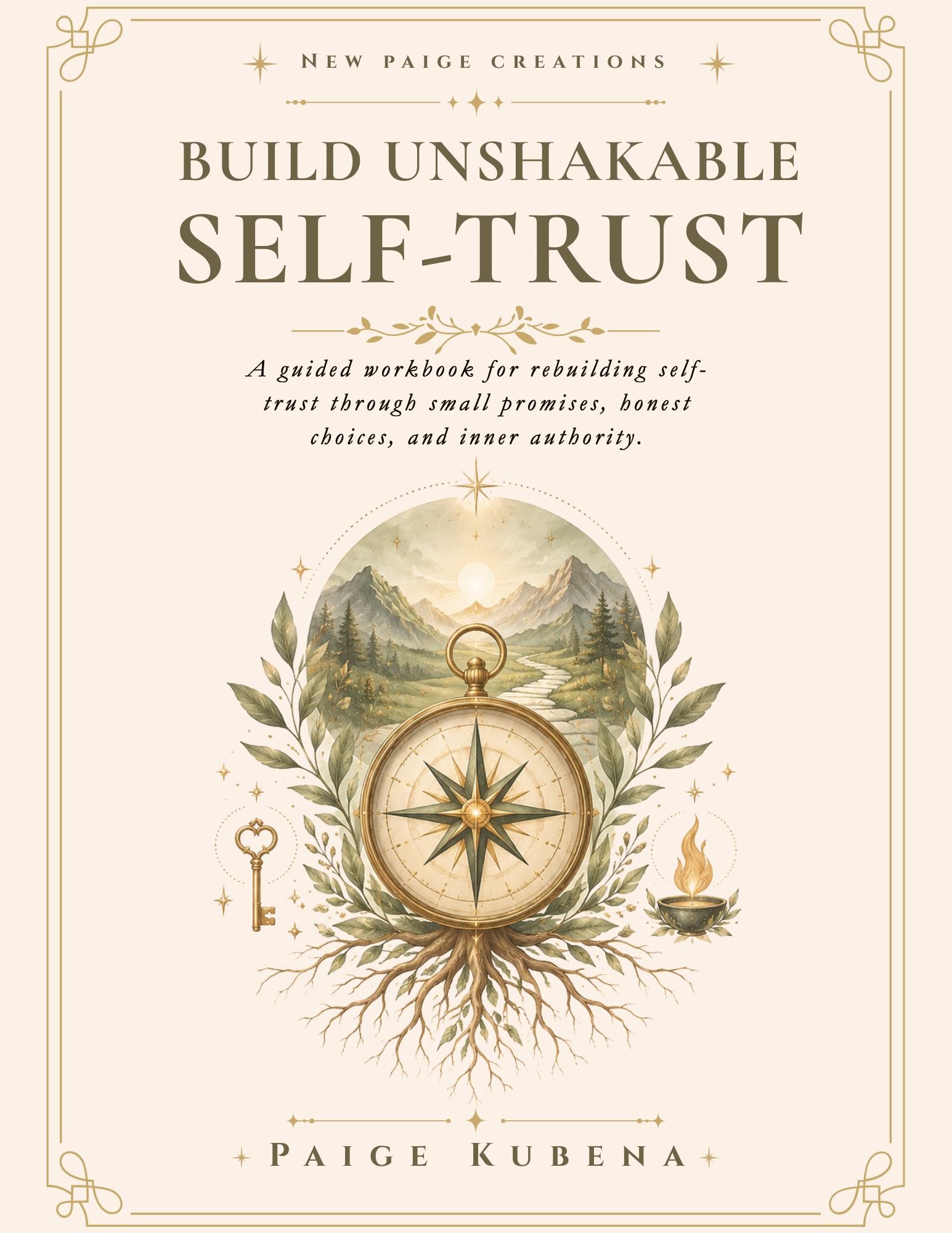
Do you ever find yourself overthinking decisions, replaying conversations, or looking to other people for answers you wish you could confidently give yourself?
Maybe you know what you want, but you second-guess it. Maybe you ask for advice, receive five different opinions, and somehow feel even more confused than when you started. Maybe you're tired of questioning yourself every time life asks you to make a decision.
The truth is that confidence isn't usually the problem. Trust is.
When you trust yourself, you don't need to have all the answers. You don't need certainty before taking action. You don't need to know exactly how everything will unfold. You trust that you'll be able to handle whatever happens next.
Build Unbreakable Self-Trust is a guided workbook designed to help you strengthen your relationship with yourself, rebuild confidence in your own judgment, and stop treating every mistake as evidence that you're failing.
Inside, you'll explore:
• What self-trust actually is (and what it isn't)
• How self-trust gets broken over time
• The difference between fear, anxiety, and intuition
• How to build evidence that you can rely on yourself
• How to navigate mistakes without losing confidence in yourself
Through thoughtful reflection prompts, practical exercises, and guided journaling, you'll begin creating the one thing self-trust is built on: evidence.
Because self-trust isn't believing you'll always get it right. It's knowing that even when life doesn't go according to plan, you'll still have your own back.
Digital Download • Instant Access
Sign up for my weekly newsletter:
A quiet corner of the internet for honest conversations about love, healing, and becoming more yourself. You'll also get journal prompts, early access to new resources, fresh blog posts, and exclusive subscriber discounts.
